
1 Big Hope, Too Few Fresh Ways To Sing It
What 295 Bisaya Adventist songs reveal about hope, repetition, and the future of songwriting.
Cleaned corpus with AI sentiment, judgment, and critique data.
The most common thematic center across the song set.
The lowest average craft score, pointing to an imagination gap.
The Surprise In The Data
Here is the first thing that surprised me: Bisaya Adventist songs are not short on themes. Not at all. They are full of them. But they keep coming back to a few sacred centers, almost like a family returning to the same table.
Across 295 analyzed songs, one theme rises above everything else: Heaven and Eternal Life. It appears in 65.8% of the songs. After that come God's character, God's love, suffering and lament, community and fellowship, salvation and grace, and faith and trust.
That pattern feels very human. These are songs from a community singing through hardship toward hope. Again and again, the songs look at pain, loss, temptation, uncertainty, and a world that does not last. Then they look up toward God's promise of a better home.
So the real question is not, "Are these songs repetitive?" Yes, they are. The better question is: what is that repetition doing to us?
Sometimes repetition is holy. It helps people remember. It steadies a church. It teaches a child what to hope for before that child even has words for suffering. But repetition can also become a creative trap. It can keep a tradition alive while slowly making its language smaller.
These songs have a strong theological center. The danger is that they may also have a narrow imaginative range.
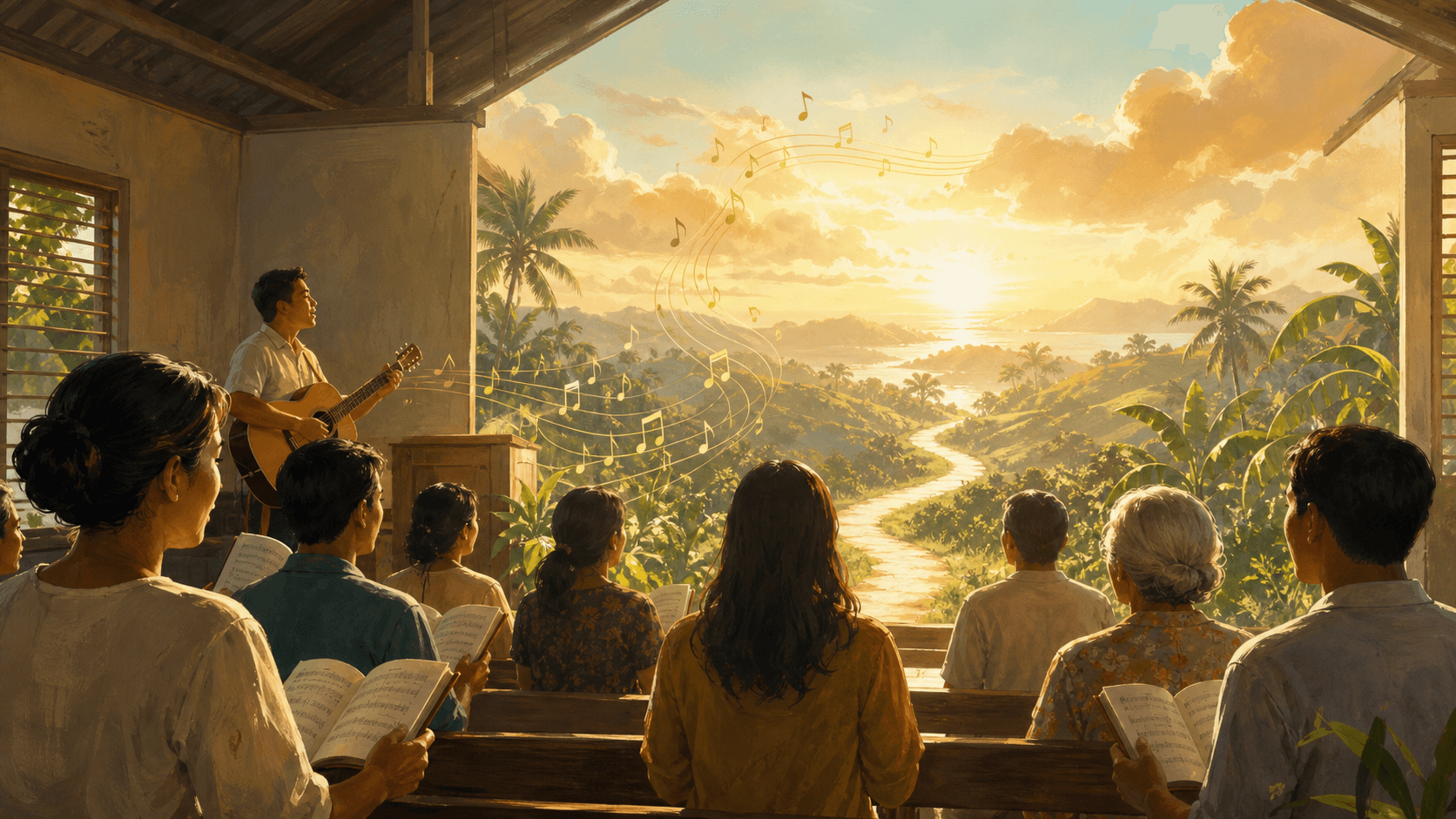
What The Songs Keep Returning To
The biggest recurring theme is heaven. But not heaven as a cold doctrine on a chart. In these songs, heaven is home, comfort, reunion, reward, escape from pain, and final healing. Heaven is often the answer to the ache of ordinary life.
That makes sense for Adventists. This is a faith tradition that has always looked forward. The Second Coming, eternal life, the end of suffering, and the hope of seeing Christ are not side topics. They are part of the emotional center of the church.
The other major themes fill out the same picture. God's character appears in 44.1% of songs. God's love appears in 29.8%. Suffering and lament appear in 25.1%. Community and fellowship appear in 23.7%. Salvation and grace appear in 21%. Faith and trust appear in 20.7%.
If you put all of that into one sentence, the songs are saying: life is hard, God is good, heaven is near, keep believing.
That is not a small message. It is the kind of message people need when they are tired, grieving, poor, afraid, or spiritually worn down.
But the numbers also show what gets less attention. Prayer appears much less often. Explicit Adventist distinctives appear in only 5.4% of songs by the current keyword lens. Warning and judgment appear in 10.2%, and only a very small number of songs use fear as their main emotional engine.
That matters. If someone expected these songs to be dominated by judgment or threat, the data points somewhere else. These songs are much more hope-shaped than fear-shaped. The center is not condemnation. The center is longing.

Recurring themes
The corpus has a gravitational center.
Why Repetition Can Be Good
A community does not become itself by singing something once.
It sings certain truths again and again until they become part of its bones. Hope. Grace. Heaven. Faith. Love. Salvation. These words keep showing up because people keep needing them.
That is the special power of songs. A sermon may stay with you for a day. A song can follow you for years. It can come back in the hospital room, on the bus, at a funeral, in the kitchen, in the field, or in a small church on Sabbath morning. A song becomes theology you can carry.
So when these songs keep returning to heaven, we should not immediately call that a weakness. It may be a sign of need. People sing heaven because earth is hard. They sing eternal life because death is real. They sing God's faithfulness because human strength runs out.
For church leaders, this matters. The constant return to heaven and endurance should not be brushed aside too quickly as escapism. In many communities, hope is not a luxury. It is survival language.
For songwriters, repetition is not the enemy either. Every tradition has repeated themes. The Psalms return again and again to praise, lament, enemies, deliverance, creation, mercy, justice, and the faithfulness of God. The issue is not whether we repeat. The issue is whether repetition makes the truth deeper or flatter.
A tradition should have favorite themes. The danger begins when it has favorite phrases and nothing more.
Repetition forms identity
Recurring songs of hope become portable theology: remembered in grief, sung in weakness, and carried into ordinary life.
Repetition can narrow language
When favorite themes become favorite phrases, truth remains present but loses image, story, surprise, and local detail.
Where Repetition Becomes Risky
The issue is not too much heaven. The issue is too few fresh ways of singing heaven.
A song can mention heaven and still surprise us. It can show us a grandmother missing the children she buried. It can imagine the quiet after resurrection answers the last hospital bill. It can let a fisherman look at the morning sea and wonder if the New Earth will smell like salt and rain. Suddenly, doctrine breathes.
But when heaven is sung mostly through the same abstract words, it can become familiar without becoming vivid. The word is still true, but the listener stops seeing it.
This is where the critique data gets useful. The weakest areas are not sincerity or cultural resonance. Many of these songs feel sincere. Many of them clearly understand the emotional world of their people. The weaker areas are craft: Show vs Tell, Metaphor Quality, Theological Depth, and Originality.
In plain language: a lot of songs say true things, but they do not always help us see those truths.
They tell us there is joy in heaven. But do they help us feel the first breath of a world without grief? They tell us God loves us. But do they show love arriving at the door, staying through shame, feeding the tired, forgiving the failed? They tell us to endure suffering. But do they name the actual suffering people carry?
These songs are not shallow because they repeat hope. They become shallow only when hope is repeated without image, story, tension, or lived detail.
“These songs are not shallow because they repeat hope. They become shallow only when hope is repeated without image, story, tension, or lived detail.”
Craft gap
The weakest scores point to imagination, not sincerity.
Show vs Tell
Average score out of 10
Metaphor Quality
Average score out of 10
Theological Depth
Average score out of 10
Originality
Average score out of 10
The Narrow Imagination Problem
A narrow imagination does not mean a narrow faith. It means the faith is larger than the language currently carrying it.
That difference matters. The songs are not empty. They are concentrated. They gather around real treasures: heaven, God's love, salvation, endurance, faith, and the return of Christ. But when writers inherit the conclusion without reimagining the journey, songs can start to sound too much alike.
Take the idea "the world is temporary." That is biblical. But there are many ways to sing it. One song can simply say that all things pass away. Another can show a rusting gate, a fading photograph, a father's empty chair, a market closing at dusk, or a child outgrowing a pair of shoes. Both may carry the same truth. Only one gives the listener something to see.
Grace works the same way. A song can say "God's grace is enough," and that may be true. But another song can show grace as the hand that lifts Peter from the water, the breakfast fire after betrayal, or the robe placed on the son who wasted everything. Theology deepens when it becomes visible.
This is where the song collection feels ready for growth. It already knows its big truths. The next step is not to abandon those truths. The next step is to let them take on flesh.
More songs could explore prayer not only as asking, but as silence, waiting, wrestling, gratitude, confession, and listening. More songs could explore Sabbath not only as a commandment, but as rest for tired bodies. More songs could explore mission not only as duty, but as love moving toward the neighbor.
There is room for songs about family, work, forgiveness, creation, justice, loneliness, aging, youth, doubt, friendship, discipleship, and ordinary holiness. There is room for songs that bring Adventist hope into kitchens, farms, classrooms, jeepneys, hospital rooms, cemeteries, and small churches with tired singers.
The hope does not need to shrink. The vocabulary needs to widen.
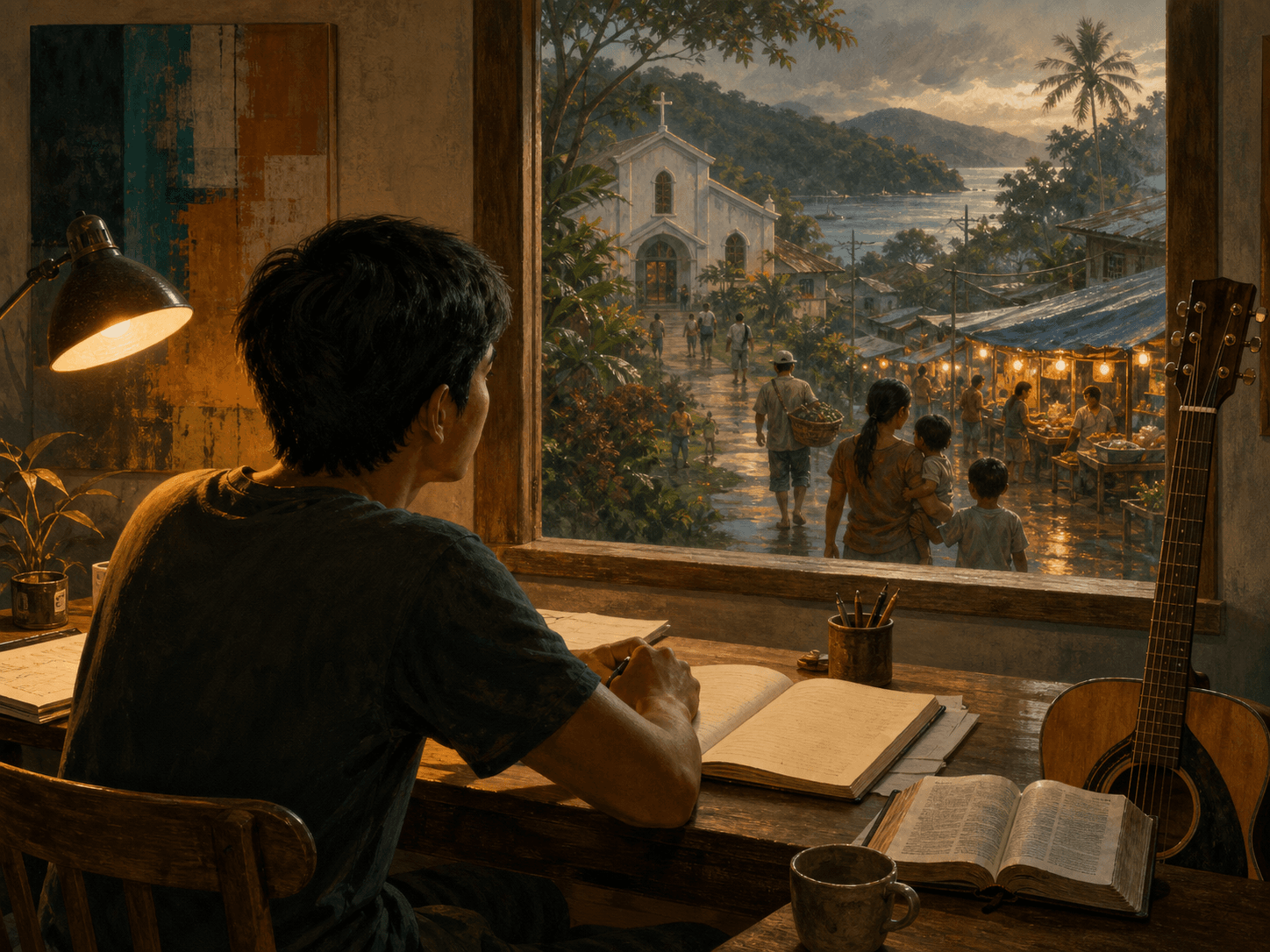
From concentration to depth
The hope does not need to shrink.
The next move is not less heaven. It is more embodied language around the same hope.
What This Means For Songwriters And Leaders
For songwriters, the challenge is not, "Stop writing about heaven." Write about heaven more deeply.
Write about it with images that have mud on their feet. Write about it through the grief of real people. Write about it through Christ, not only as a destination, but as the One who walks with us on the way there. Write about heaven in a way that makes people desire holiness, not merely escape.
And when writing about suffering, resist the shortcut of naming pain in general. Show us the particular ache. Show us the young person fighting discouragement. Show us the mother praying at midnight. Show us the worker choosing honesty when dishonesty would be easier. Show us the church member still singing after disappointment.
For church leaders, the challenge is to listen to these songs as a spiritual checkup. They reveal what the community already knows how to sing. They also reveal what may need more care.
If prayer is underrepresented, encourage songs of prayer. If Sabbath appears rarely, invite songs that make Sabbath beautiful, human, and Christ-centered. If mission is thin, ask for songs that connect the blessed hope with love for the world now. If judgment appears, make sure it is held inside grace, not used as emotional pressure.
A church's songbook is never just music. It is a curriculum of desire. It teaches people what to love, what to fear, what to expect, and what kind of God they think they are approaching.
So the question is not only, "Are these songs singable?" It is also, "What kind of people are these songs forming?"
“A church's songbook is never just music. It is a curriculum of desire.”
The Hope Is Already There
The good news is that these songs do not need a new center. They already have one.
They are centered on hope. They are centered on God's faithfulness. They are centered on the promise that suffering will not have the last word. That is not a small thing. In a world full of disposable music and thin comfort, a community that keeps singing eternal hope is preserving something precious.
But preservation is not the same as renewal.
The next generation of Bisaya Adventist songwriting does not need to become less Adventist, less hopeful, or less heavenly minded. It needs to become more deeply imaginative with the hope it already has.
The songs have taught the people where they are going. Now the task is to sing the journey with more color, more honesty, more Scripture, more Christ, more earth, more body, more neighbor, more sorrow, more wonder.