7 Patterns We Almost Missed In The Song Data
The first findings showed a hope-shaped corpus. The second pass asks how those hopes combine, where they separate, and what that means for Cebuano Adventist songwriting.
Long-form reflections on Bisaya Adventist music, theology, craft, and congregational imagination.

Songs with suffering or lament language that do not also use prayer or supplication keywords.
The first findings showed a hope-shaped corpus. The second pass asks how those hopes combine, where they separate, and what that means for Cebuano Adventist songwriting.
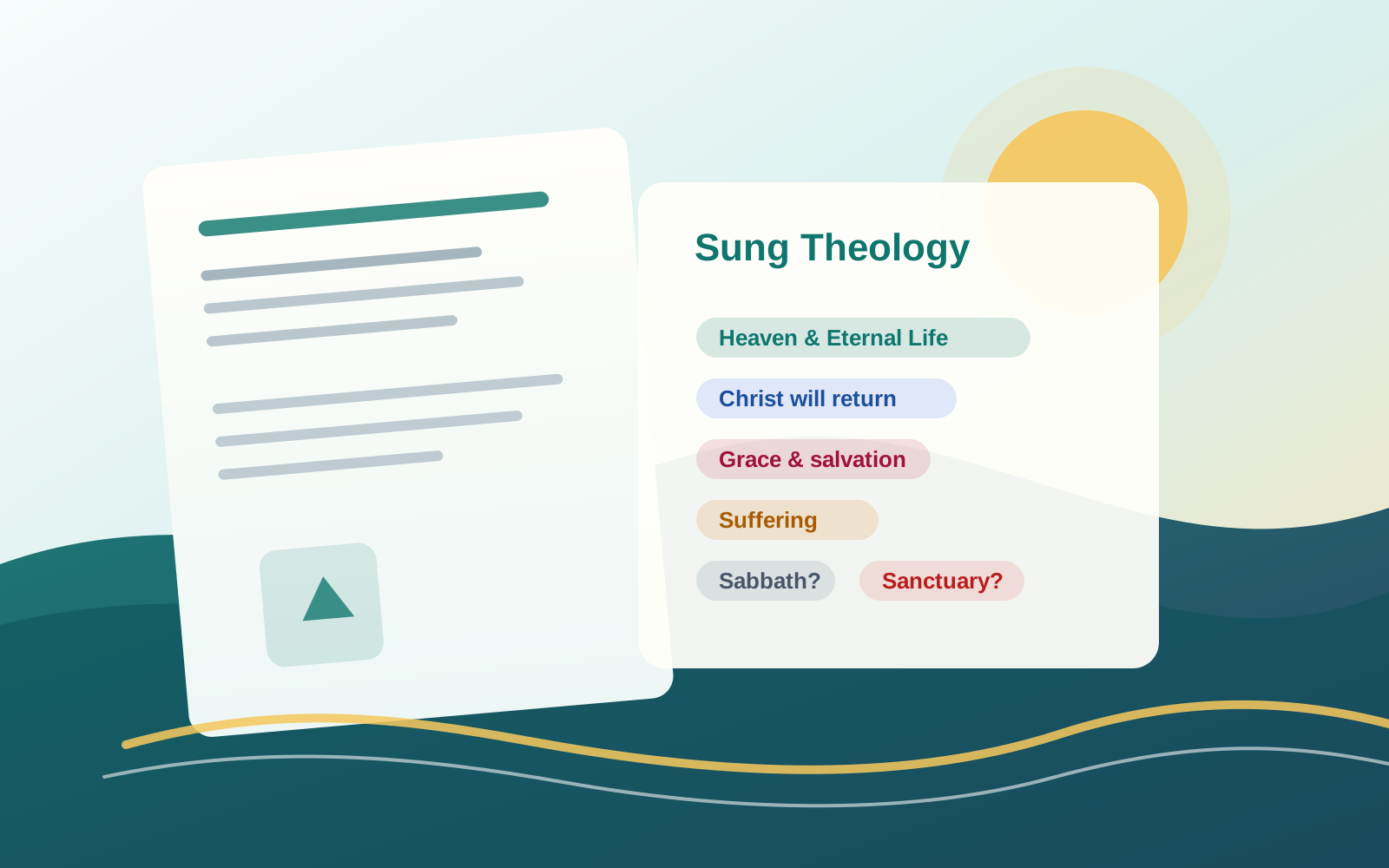
The corpus does not function as a sung version of the 28 Fundamental Beliefs. It functions more as a sung spirituality of hope, endurance, heaven, and readiness.

A data-informed essay on how 295 Bisaya Adventist songs name suffering without letting suffering become the final word.

A reflective essay on what the weakest songwriting scores reveal about church life, theological imagination, and the kind of language a worshiping community inherits.

These songs are not running out of things to say. They keep circling a few big hopes. That can be beautiful, but it can also make the writing feel too familiar.

A reflection on the vertical and horizontal balance problem in Cebuano Adventist songwriting: songs that speak about God, but less often to God.

A study of Christocentric specificity in the critique results: moving from generic God-language toward the concrete story and work of Christ.

A craft-focused article on verse development, narrative arc, emotional progression, and why congregational songs still need movement.

A practical article on repetition, hooks, titles, rhyme, prosody, and singability in Cebuano Adventist worship songs.

A practical guide for songwriters on lyricizing doctrine through image, metaphor, verbs, Scripture, and lived Cebuano experience.